At the Artists Collective in Hartford, there’s no graffiti on the walls. No one loiters on the corners of the collective’s block on Albany Avenue. When cofounder and executive director Dollie McLean walks down the street, young men turn their hats around proper, clean up their language and stand up straight.
There’s respect in this inner-city neighborhood for the collective, what it stands for, and what it has done and is doing for the Upper Albany community.
Kids go there for after-school and summer programs that keep them off the streets and away from drugs, violence, and crime while teaching them skills in dance, music, the arts, self-esteem and social responsibility. An annual rite-of-passage ceremony (Yaboo) welcomes adolescents into adulthood, with a focus on traditional African family values. People of all ages come for workshops and classes.
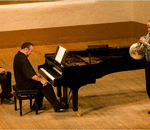
The collective’s performing groups include an outstanding Youth Jazz Orchestra and a Choreographer’s Workshop dance ensemble. Jazz giants like Sonny Rollins, Cecil Taylor, Wynton Marsalis, Sheila Jordan and Lou Donaldson have given concerts there; most concerts include workshops so students can learn from the masters. President Bill Clinton arrived in November 1999 to praise the collective as a prime example of urban development.
Eriq LaSalle (“ER”) is an alumnus; so are Tony Todd (“Platoon”), Anika Noni Rose (“Dreamgirls”) and drummer Cindy Blackman, who will bring her quartet to the collective on Sept. 13, for a free community concert.
I was in Connecticut last week and had the opportunity to meet Dollie McLean, widow of the legendary alto saxophonist Jackie McLean. She spent more than two hours telling stories and leading a personal, up-close tour of a facility she’s proud of and rightly so. Tens of thousands of children, teens, and families have been touched by the collective, which serves a predominately low-income black, Caribbean and Latino constituency.
From living room to a permanent space
The collective was a dream Dollie and Jackie shared. Early events took place in the McLeans’ living room, then in borrowed spaces throughout Hartford including storefronts and churches. In 1975, the city let them use a former Catholic school.
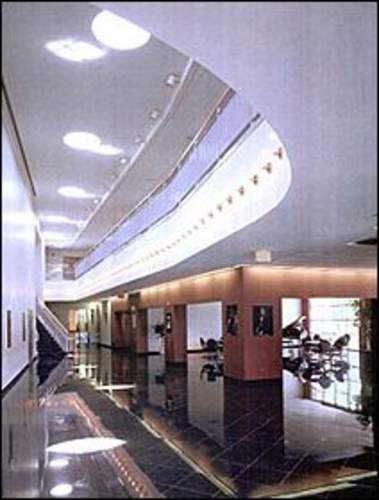
But they wanted their own home, a new building designed to meet the needs of the collective’s programs, and they wanted to put it on Albany Avenue. It took years of fundraising and setbacks before the building opened in 1999. Built at a cost of $6.7 million, it boasts 40,000 square feet of classrooms, dance studios, practice rooms, and a theater that seats 400.
That the Center exists is a miracle in many ways. Local business owners questioned the McLeans’ decision to put it in a troubled neighborhood. Some funding came through, some didn’t.
Long before then, it seemed unlikely that Jackie McLean would end up co-founding a nationally acclaimed arts center. Like many jazz musicians, he followed saxophonist Charlie Parker down the path to drug use. He spent time in Rikers and battled heroin addiction, a habit he kicked after years of struggle and support from Dollie.
Courtesy of the Artists Collective
Dolly McLean at the Artists Collective.In 1968, Jackie was invited to teach part time at the Hartt School of Music at the University of Hartford, which until then had offered no classes in African-American music and jazz. At first he commuted between Hartford and New York City, where Dollie and the children still lived. She had been accepted as an actress in the Negro Ensemble Company and planned to stay. When Jackie’s teaching load increased, the family moved to Hartford.
Jackie and Dollie became one of the city’s power couples. The Hartt School established a department of African-American music and named Jackie its director; in 2001, the department was renamed the Jackie McLean Institute of Jazz. Dollie took a part-time job in community outreach for the Wadsworth Atheneum Museum of Art, organized its first-ever exhibit of West African artifacts, and persuaded the directors to show more works by contemporary African-American artists. They networked and befriended other movers and shakers.
Jackie died in 2006. Dollie had long been the collective’s executive director and continues in that role. She’s trying to cut back on the time she spends at the collective, but the week before we met she had come in all seven days. The current economic climate is tough on nonprofits. The collective has had to raise the costs of some offerings and discontinue the buses that brought kids in for after-school programs.
Some of the original plans for the center, including a state-of-the-art recording studio, are still on hold, but banisters were recently added to stairways in the theater and the steel drums were tuned.
A collective gathering to watch Obama
On the day of our visit, a new satellite dish was being installed on the roof in preparation for a Convention Watch Party today (Aug. 28). Congressman John B. Larson, D-Conn., area Democrats and community members will gather to watch as Sen. Barack Obama of Illinois gives his acceptance speech.
While the dish was going up, auditions were taking place in the second-floor dance studio. We stood in a corner and the dancers, graceful as gazelles, stuck to business and ignored us. Dollie pointed to one and said, “See the girl with glasses? She’s been coming to the collective for years. Her mother was carrying her when we first met.”
On the way out, we met the mother. She was filling out a form for yet another class.
CLICK HERE
http://www.minnpost.com/pamelaespeland/200...
 Posted By: Anna King
Thursday, August 28th 2008 at 1:50PM
You can also
click
here to view all posts by this author...